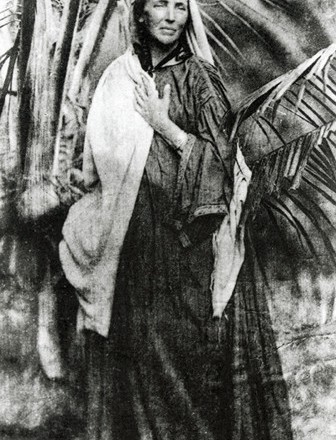
Marianne North (1830-1890) was a well-known botanical painter who traveled around the world twice in search of rare flowers and plants. Her paintings of flowers in their natural habitats gave a glimpse of plants inaccessible to most people. In 1882, a gallery of her work opened at England’s Royal Botanic Gardens at Kew. The gallery, still open to the public, houses 832 paintings produced by North over 13 years.
Marianne North was born in Hastings, England, on October 24, 1830. Her father, Frederick North, was a wealthy landowner and a member of Parliament. Little is known about North’s mother. North had a sister, Catherine, who was seven years younger and a brother, Charles, two years younger. North had little formal education, but the family was rich and cultured and she was exposed to well-known artists and botanists. She showed a talent for singing and took voice lessons. In 1847, the family began a three-year trip through Europe where North studied flower painting, botany, and music.
North’s mother died in 1855 and North became the mistress of the family’s homes in Hastings and London. She loved to sing, but when her voice gave way, she took up flower painting, which was considered a respectable hobby for a lady of leisure. Painting was never expected to be North’s career, since wealthy 19th century women were not expected to work. She was also interested in botany and, through her father, knew Sir Joseph Hooker, director of the Royal Botanic Gardens at Kew.
Every summer, after Parliament closed its session, North, her father, and her sister traveled to Europe. They visited Switzerland, Austria, Spain, Italy, Greece, and the Bosphorus. As was a custom at the time, each traveled with a diary and a sketchbook. North’s friends encouraged her to describe her travels. During a trip to Spain, Marianne first attempted landscape painting using watercolors.
In 1864, North’s sister married. After her father lost his seat in Parliament the following year, North and her father spent even more time traveling, visiting Switzerland, the South Tirol, Egypt, and Syria. She searched out plants and painted everywhere she went. Around 1865 North learned oil painting and found that she much preferred it over watercolors. In Visions of Eden: The Life and Work of Marianne North, she said, “I have never done anything else since, oil-painting being a vice like dram-drinking, almost impossible to leave off once it gets possession of one.”
During a trip to the Alps in 1869, Frederick North became ill and North brought him back to Hastings, where he died. North’s father had doted on her throughout her life and she was devastated at the loss. She said of her father in her autobiography, “He was from first to last the one idol and friend of my life, and apart from him I had little pleasure and no secrets.” Painting helped her overcome her grief. Her large inheritance allowed her to resume her travels. She went to Sicily with her maid, but did not enjoy her companion’s company. Two years later, at the age of 41, North sold the Hastings home and devoted herself to botanical painting. She began a series of trips in search of plants and flowers from all corners of the earth. “I had long had the dream of going to some tropical country to paint its peculiar vegetation on the spot in natural abundant luxuriance,” North said in her autobiography.
A Brazilian Epiphytal Orchid 1873
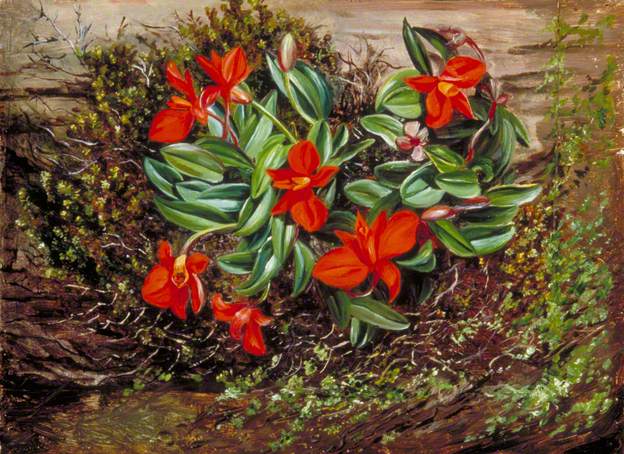
A Bank of Quaresma and Trumpet Trees, Brazil
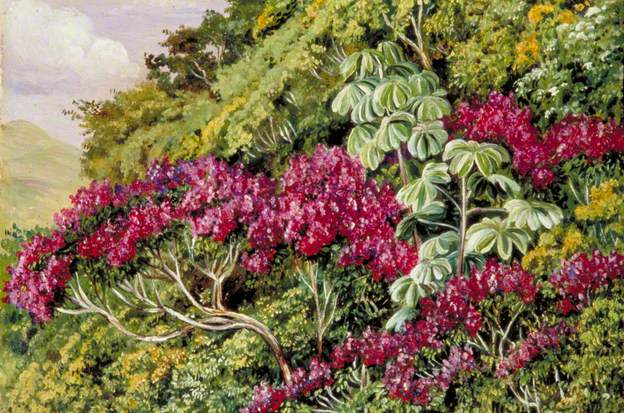
A Fallen Giant, Calaveras Grove, California 1875
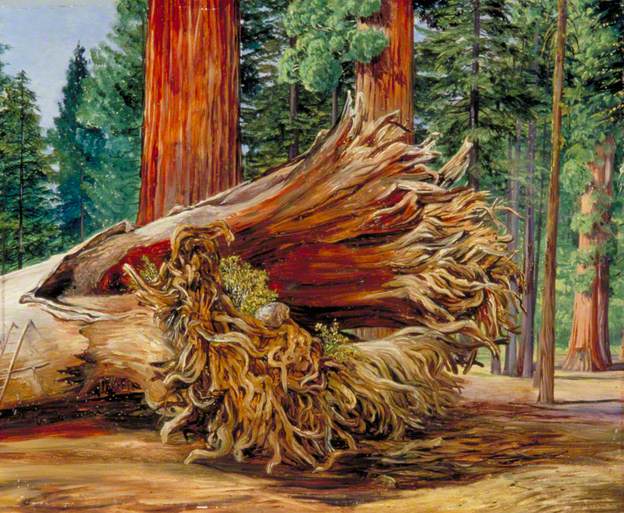
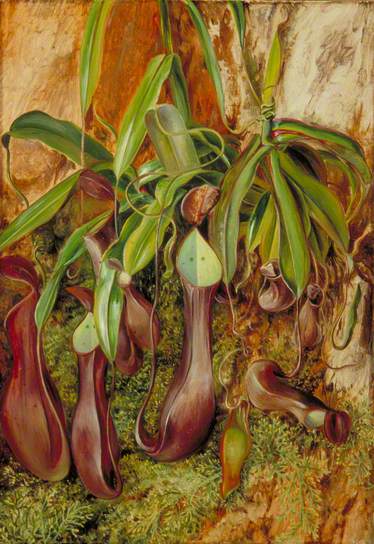
A Bornean Pitcher Plant, Sarawak, Borneo 1876
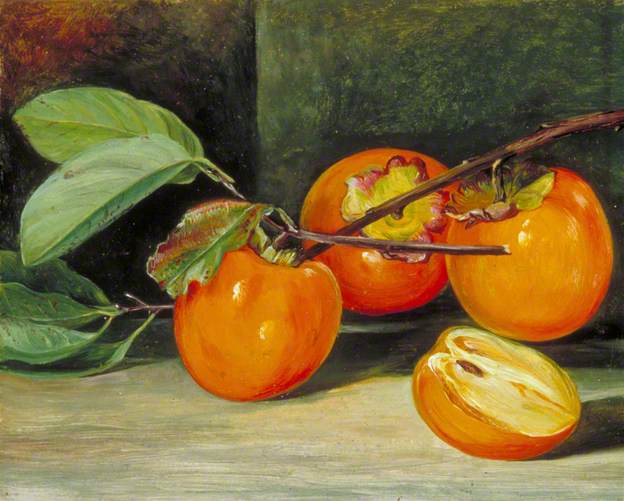
Japanese Persimmon or Kaki Fruit 1876
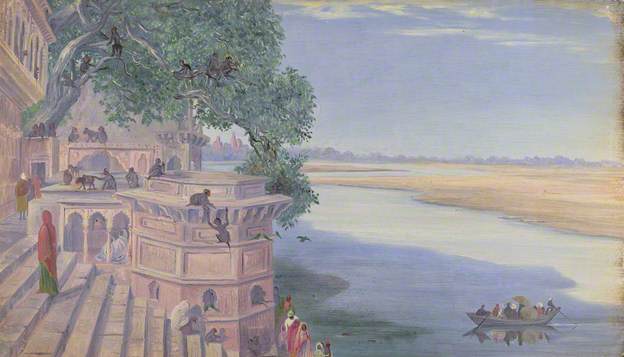
‘Bindrabun. India. Novr. 2d 1878
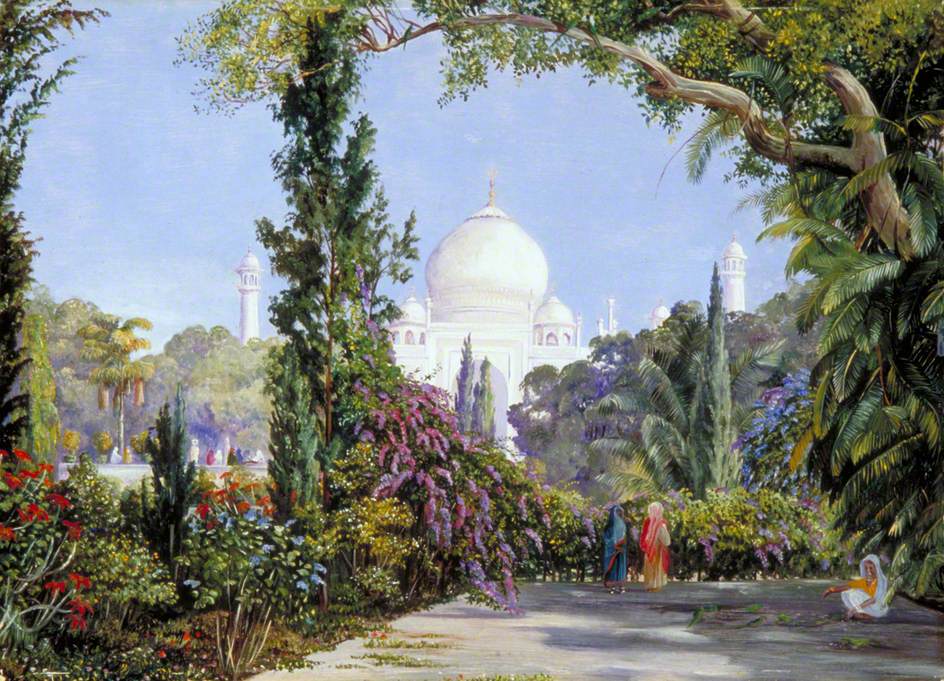
The Taj Mahal at Agra, North-West India 1878
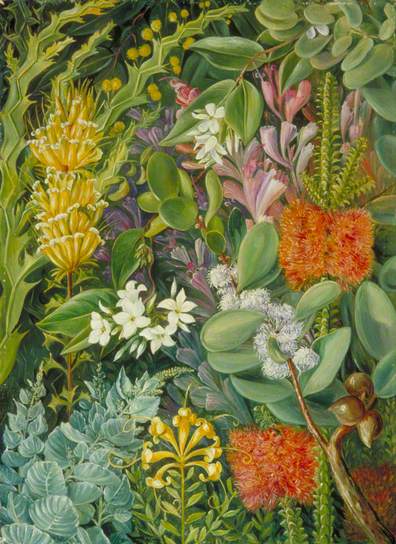
A Selection of West Australian Flowers 1880
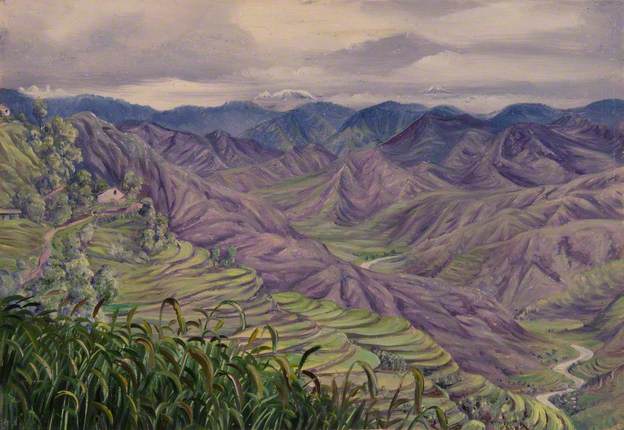
From Almorah, Kumaon, India 1880
Mosques of the Queen, Ahmedabad 1880

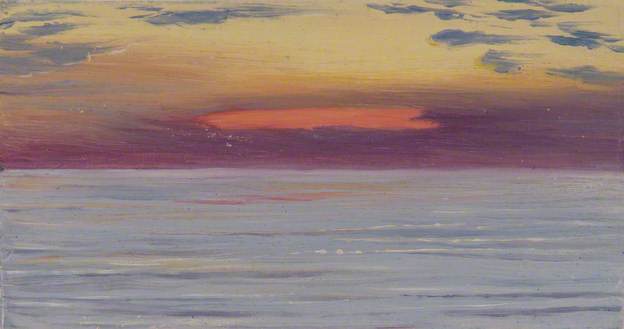
Red Sea 1880
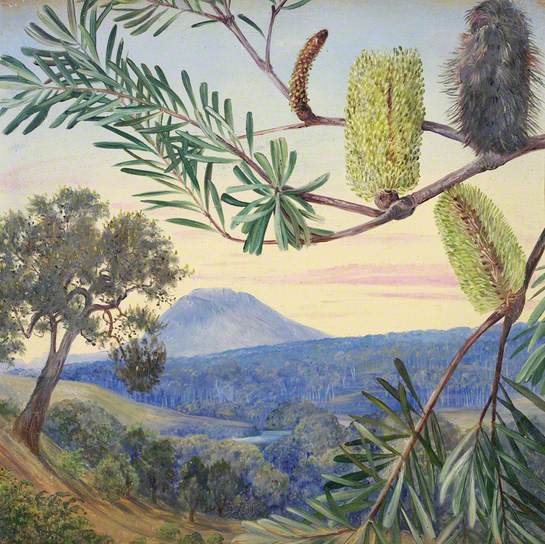
Banksia of Tasmania 1881
‘Coming Out’ of a Cape Beauty 1882
lkeehe