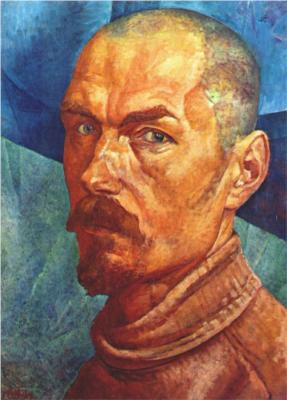
Kuzma Petrov-Vodkin(1878-1939) was a Russian, later Soviet, painter and writer. He was first exposed to art as a child, when he took a few lessons from a local sign maker and icon painter. After secondary school, however, he wanted to join a railroad college, abandoning the artist life. He failed the entrance exams to the college, however, and instead began “Art Classes of Fedor Burov,” in his late teens. After the death of Burov two years later, Petrov-Vodkin took odd jobs painting in the city. Through his jobs and with his mother’s help, he was able to get an invitation to study in St. Petersburg, from 1895 to 1897. In art school, he later moved to Moscow and then Munich, graduating in1904.
Petrov-Vodkin often entered in open conflict with the Russian-Orthodox Church, which considered his paintings too erotic, a conflict which was discussed by Alexandre Benois, a proponent of Petrov-Vodkin’s works, and Ilya Repin, a detractor. His use of Russian religious iconography was also deemed blasphemous, and at one point the church, disapproving of the artist’s work on a chapel in Samara, destroyed his paintings. His paintings were often centered on what he considered his “spherical perspective,” which made the viewer aware of the curve of the globe. He was also an accomplished violinist.
After contracting pulmonary tuberculosis in 1927, Petrov-Vodkin was forced to quit painting. He thusly turned to writing, completing a number of works, including three semi-autobiographical novels, the first two of which are considered some of the finest Russian literature of the time. The soviet government, which was a supporter of Petrov-Vodkin’s works, disallowed the organization of any but state authorized artistic groups in 1932. One of these state supported groups was the Leningrad Union of Artists, of which Petrov-Vodkin was elected the first president in 1932.
Petrov-Vodkin’s works were largely ignored after his death of tuberculosis, until the mid-1960’s when there came a renewed interest in both his artistic and literary works. His three self-illustrated and semi-autobiographical books were republished in the 1970’s and much acclaimed.
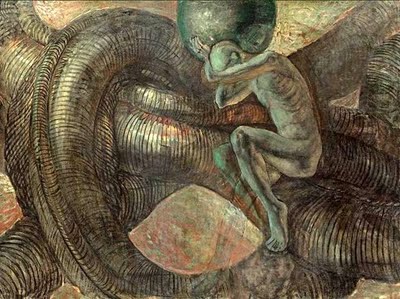
Chaos, 1906
Cafe 1907
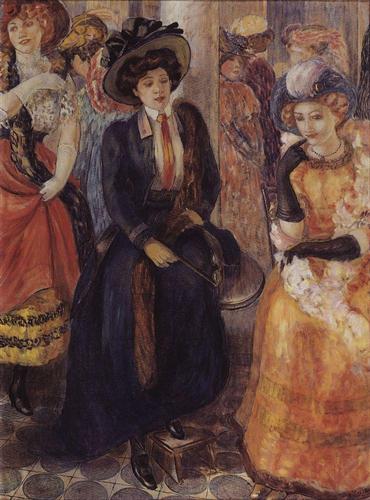
In the veil 1907
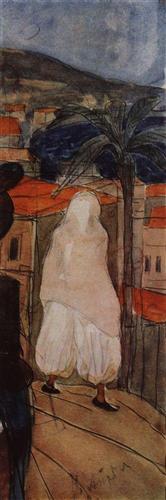
The Dream 1910
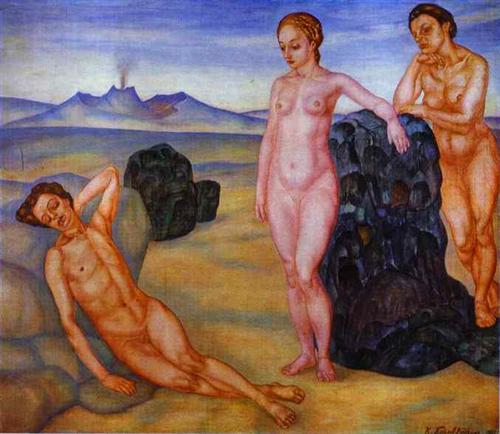
Boys 1911
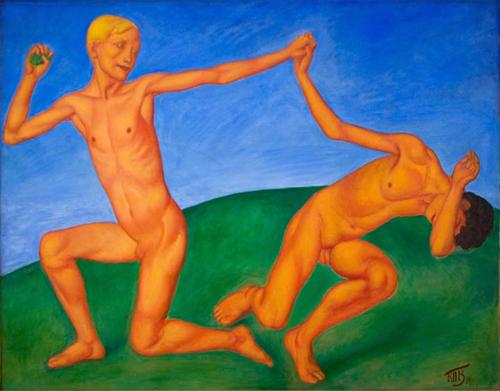
Bacchante 1912
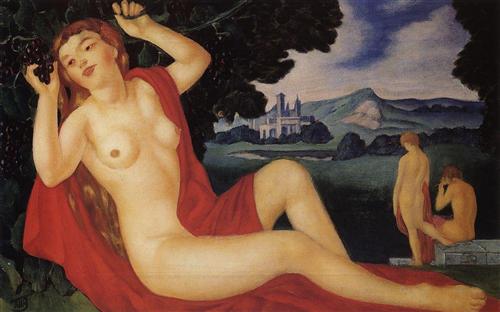
Bathing of the Red Horse 1912
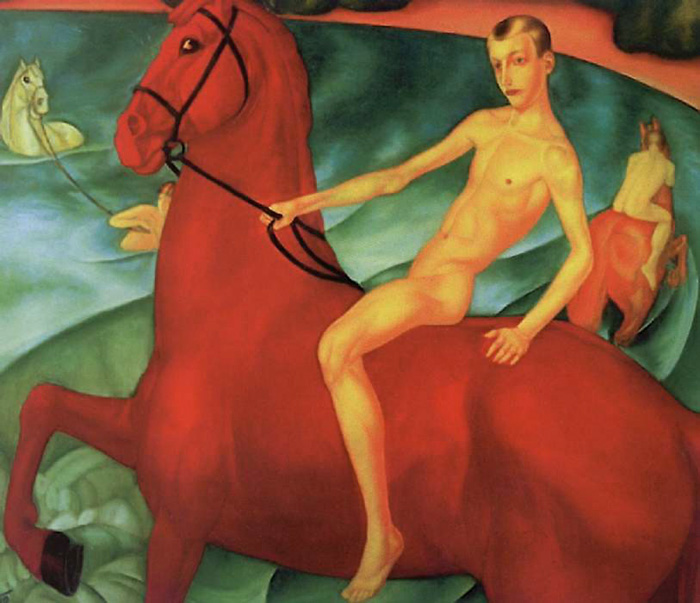
Youth (Kiss) 1913
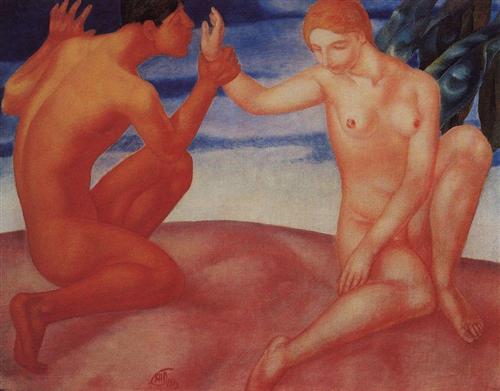
Virgin of Tenderness evil hearts 1914
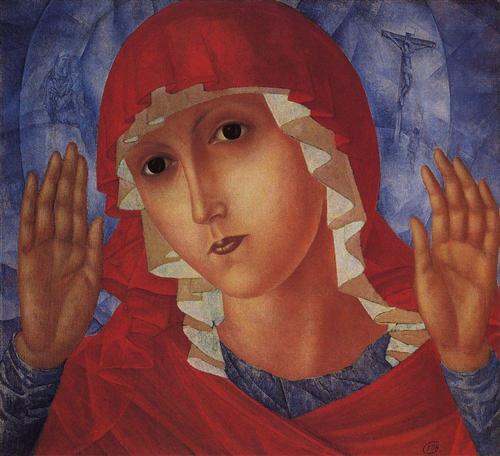
Hurricane 1914
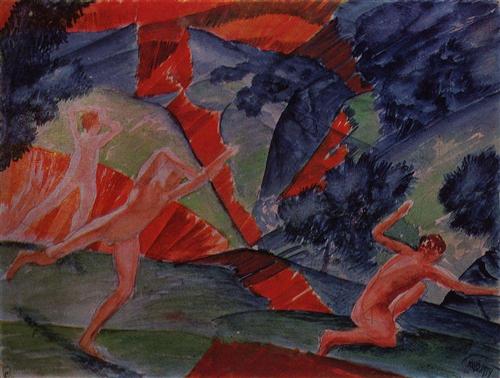
Peter’s denial 1919
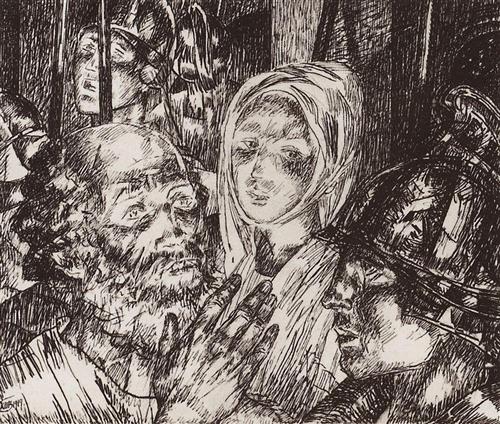
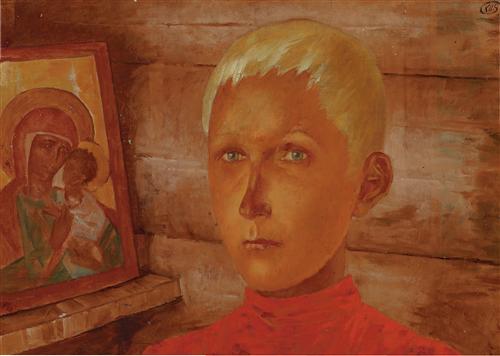
Vasya 1922
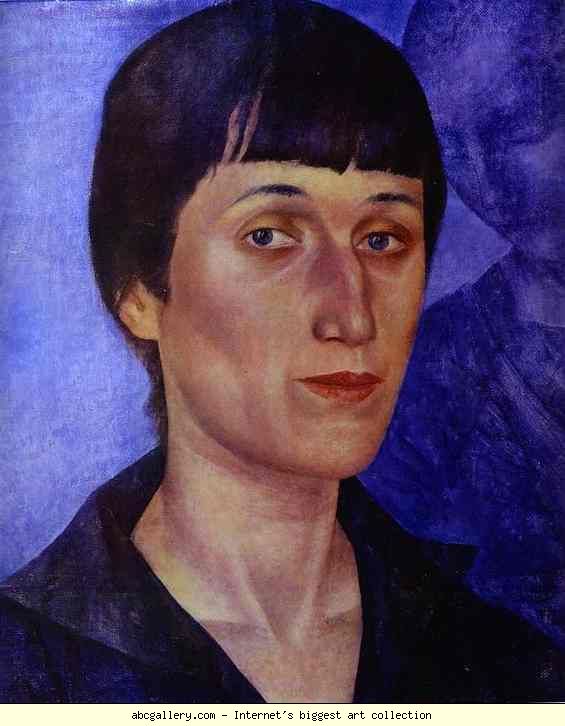
Portrait of Anna Akhmatova. 1922
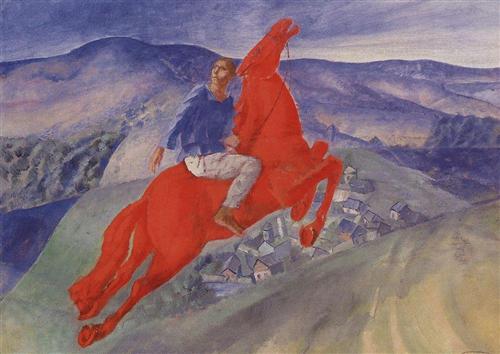
Fantasy 1925
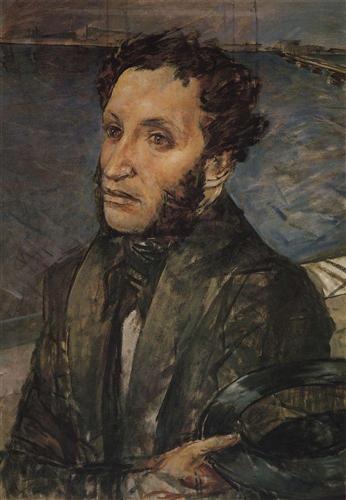
Pushkin in St. Petersburg 1930
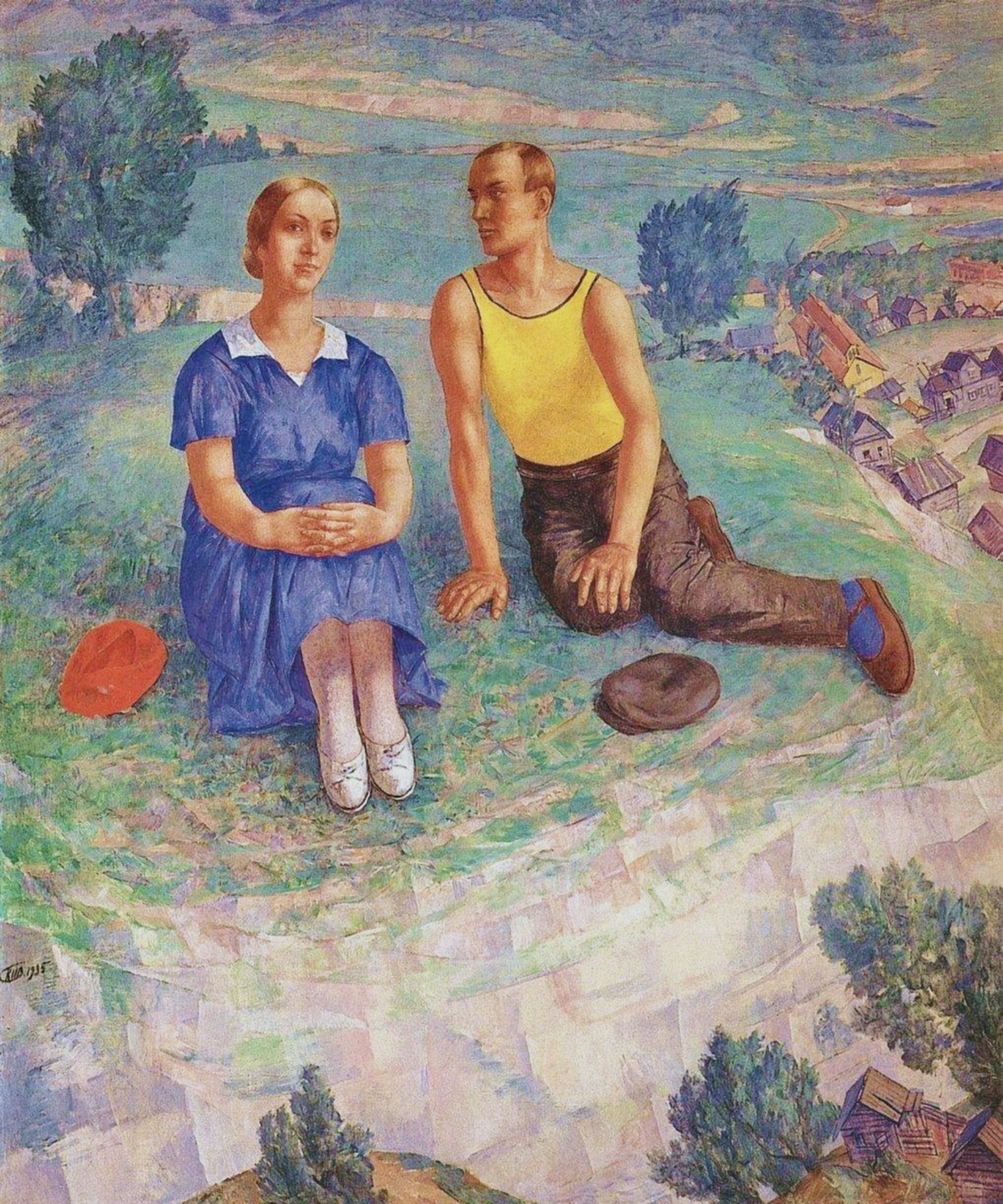
Spring 1935